

In many places, a landlord can restrict or ban space heaters in the lease, especially fuel-burning ones, and some cities ban certain types outright. New York City, for example, prohibits kerosene and propane space heaters. A ban never replaces your duty to provide adequate heat, so fix heating problems first.
General information, not legal or insurance advice. Rules vary by state and city; check your local fire code, lease and insurer.
Can landlords ban space heaters?
Often yes, through the lease, but there is no single national rule, and a ban does not replace your duty to provide adequate heat.
Whether you can ban or limit space heaters depends on your lease, your state’s landlord-tenant law and your local fire code. What a policy cannot do is stand in for working heat. If tenants are reaching for heaters because the unit is cold, that is a repair issue first; the renter’s side is covered in what to do when a landlord is not providing heat.
Heating fires peak in winter. The NFPA’s Home Heating Safety page says “Nearly half of the heating equipment fires (46%) occurred in the three-month period from December through February.”
Why do space heaters worry landlords?
Because space heaters and heating stoves account for most deaths and injuries in home heating fires.
According to the NFPA’s January 22, 2026 news release, “U.S. fire departments responded to an annual estimated average of 37,365 home heating equipment fires from 2020-2024,” “accounting for 11 percent of all reported home fires during this time,” and “these fires resulted in 417 civilian deaths, 1,260 injuries, and $1.2 billion in property damages.”
The same NFPA release says space heaters and heating stoves accounted for “over seven out of 10 deaths (73 percent) and seven out of 10 (70 percent) of the injuries” in home heating equipment fires.
The U.S. Consumer Product Safety Commission (CPSC) release of January 23, 2026 says: “CPSC estimates that portable heaters, including electric space heaters, are involved in an average of 1,600 fires per year, resulting in an average of 70 deaths and 150 injuries annually from 2020 to 2022.”
Are some space heaters illegal in apartments?
Yes, in some places. New York City bans kerosene and propane space heaters, so check your city’s fire code.
For New York City only, FDNY Smart (the FDNY’s fire safety education site) says: “The use of kerosene or propane space heaters is strictly prohibited and illegal in New York City.” FDNY Smart also advises using portable electric heaters certified by a recognized testing lab such as Underwriters Laboratories (UL). Other cities and states set their own rules, so ask your local fire marshal or fire department what applies to your building.
What should a rental space heater policy include?
Pick a level of restriction that fits your building, then spell out the safety conditions in writing.
These options are suggestions, not legal requirements. Check your state and local law, and ask your insurer whether a heater policy matters for your coverage.
| Option | What it says | When it fits |
|---|---|---|
| Safety notice only | No restriction; tenants get written safety tips each winter | Reliable building heat and modern wiring |
| Electric heaters only, with conditions | Lab-certified models with tip-over and overheat shutoff, plugged into a wall outlet, three feet of clearance, off when sleeping | Most rentals; a balanced default |
| No fuel-burning heaters | Bans kerosene and propane heaters | Any building; required in places like New York City |
| Full ban | No portable heaters of any kind | Only with reliable building heat and a fast repair process |
Whatever you choose, apply the same policy to every tenant. If a tenant asks for an exception for a medical need, handle it through your reasonable accommodation process; see how reasonable accommodation requests work.
What should a winter safety notice to tenants say?
Keep it short and base each tip on CPSC and NFPA guidance.
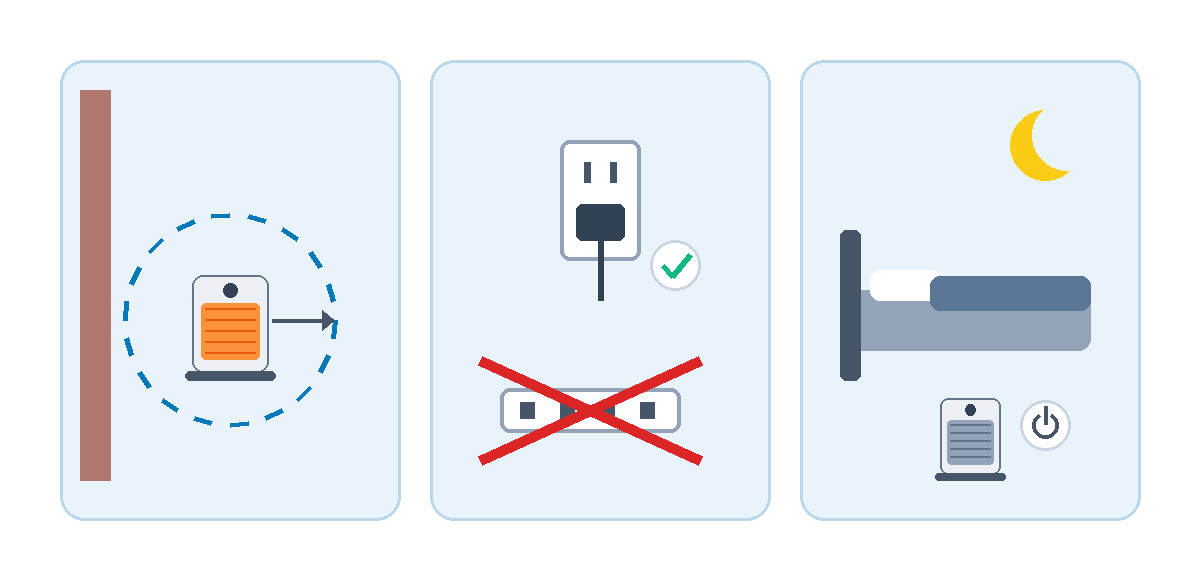
The CPSC’s January 2026 release advises: “Keep portable heaters at least three feet away from drapes, furniture, bedding and other combustible materials to prevent fires.” It also says to “Plug electric space heaters directly into a wall outlet,” and “never into an extension cord or power strip.” It adds: “Turn off heaters when sleeping.” For fuel-burning heaters, it says: “For fuel-burning portable heaters, never refuel when in use. Turn the heater off and let it cool before refueling.”
NFPA’s release advises: “Use space heaters in accordance with the manufacturer’s instructions. Turn them off when leaving the room or going to sleep.”
The CPSC’s portable heater safety sheet adds: “If the heater’s cord or plug is HOT, disconnect the heater and contact an authorized repair person. If any part of the outlet is hot, contact a certified electrician.” In your notice, ask tenants to report warm outlets or breakers that trip repeatedly to you right away.
Here is a sample notice you can adapt. Fill in the brackets:
Winter safety notice: [property address]

If your unit feels cold, report it to [name, phone or portal] first so we can fix the heat.

If you use a space heater (where the lease allows):
- [Electric heaters only / no kerosene or propane heaters, per the lease]
- Keep it at least three feet from drapes, furniture, bedding and anything else that can burn.
- Plug it directly into a wall outlet, never an extension cord or power strip.
- Turn it off when you leave the room or go to sleep.
- Follow the manufacturer's instructions.
- Tell us right away if an outlet feels hot or a breaker keeps tripping.

Please test your smoke and carbon monoxide alarms and let us know if one does not work.

[Landlord name] | [Date]
Pair the notice with an alarm check at move-in and each season; see smoke detector requirements for landlords.
Can you add a space heater rule in the middle of a lease?
Only as your lease and state law allow, so check your lease’s rules-change terms first.
Some leases let a landlord adopt reasonable building rules with notice, and others need the tenant’s agreement to change terms. If yours is unclear, a winter safety notice with tips is usually a safer first step than a new ban, and you can write a clear clause into the next lease. For what belongs in the lease, see the lease agreement checklist. A sample clause, with brackets to fill in:
Portable heaters. Tenant may use [only electric] portable heaters [with automatic tip-over and overheat shutoff]. Kerosene, propane and other fuel-burning portable heaters are [not permitted]. Heaters must be kept at least three feet from drapes, furniture, bedding and other combustible materials, plugged directly into a wall outlet (never an extension cord or power strip), and turned off when Tenant is sleeping or away. Tenant will promptly report any heating problem, hot outlet or repeatedly tripping breaker to Landlord at [contact].
What should you do if a tenant needs a space heater because the unit is cold?
Treat it as a heat repair request, and fix the heating system first.
A tenant who asks about a heater is often telling you the heat is not keeping up. Respond in writing, schedule a repair, and keep a record. Servicing the furnace before the cold sets in is on the winterize your rental property checklist.
How does Apartment One help landlords start every lease on the right foot?
You can list properties for free and receive pre-screened applicants to review against your written criteria.
Apartment One is an online platform where renters complete a verified background and credit screening once, then get matched to rental properties they qualify for, while landlords list properties for free and receive pre-screened applicants.
The Tenant Fit Index (TFI) is Apartment One’s 0-100 score matching a renter to a property based on credit, income-to-rent ratio, eviction history, criminal history, and lifestyle preferences. The TFI is a tool used alongside written criteria, not a ranking or a decision-maker.
Apartment One is FCRA-compliant and follows GLBA and CCPA data handling. Data is encrypted, and payments are processed through Stripe.
Start every lease with clear rules and qualified renters.
Frequently asked questions
Can a landlord ban electric space heaters?
In many places a lease can restrict them, but rules vary by state and city, and a ban does not replace your duty to provide adequate heat.
Are oil-filled or ceramic heaters safer?
We don’t rank heater types or brands. Whatever the model, follow the manufacturer’s instructions and CPSC safety tips.
Can I charge tenants more for electricity if they use heaters?
Only as your lease and local law allow. Check how utilities are billed in your lease before changing anything.
Who is liable if a space heater starts a fire?
It depends on the facts, the lease and the law. Ask an attorney and your insurer about your situation.
Does a space heater meet the landlord’s heat requirement?
Generally you should not count on it. See our renter guide on heat for examples, and fix the building’s heat first.