

Landlord insurance, often sold as a dwelling or rental dwelling policy, covers the building you rent out, property you leave on site, often liability, and lost rent after a covered loss. It does not cover your tenant’s belongings. A homeowners policy may not cover a home while it is rented, so call your agent first.
General information, not insurance, legal or tax advice. Coverage depends on your policy and state. Talk to a licensed insurance agent.
What is landlord insurance?
Landlord insurance is a policy built for a home you rent to someone else rather than live in yourself.
The Insurance Information Institute (Triple-I) says that if you plan to lease your home “for a longer period of time, say six months or a year, you will likely need a landlord or rental dwelling policy.” The North Carolina Department of Insurance explains that a dwelling fire policy “is typically used for someone that does not make the property their primary residence,” and lists rental properties among the homes it may suit. Policy names, forms and terms vary by insurer and state.
Do you need landlord insurance if you already have homeowners insurance?
Usually, yes, once you rent the home out on a lease; check with your agent before the first tenant moves in.
Triple-I says: “Before renting out your home, your first step should be to call your insurance agent.” It warns that “your standard homeowners policy may not cover losses incurred while your home is rented out, and you may require a more specialized insurance policy.”
Short-term rentals are a separate case. Triple-I says that renting your primary residence “for short periods on a regular basis, to various ‘guests,’ this would constitute a business,” and that “Standard homeowners insurance policies do not provide any coverage for business activities conducted in the home.” If you rent for a few months at a time, see how to screen tenants for a mid-term rental and ask your agent which policy fits.
What does landlord insurance cover?
It typically covers damage to the structure, your property left on site, liability, and lost rent while the home is repaired after a covered loss.
According to Triple-I, landlord policies cover “physical damage to the structure of the home caused by fire, lightning, wind, hail, ice, snow or other covered perils,” plus “any personal property you may leave on-site for maintenance or tenant use, like appliances, lawnmowers, and snow blowers.” Triple-I says the policy “also includes liability coverage; if a tenant or one of their guests gets hurt on the property, it would cover legal fees and medical expenses.”
Triple-I adds that “Most landlord policies provide coverage for loss of rental income in the event you are not able to rent out the property while it is being repaired or rebuilt due to damage from a covered loss,” and that this coverage “is generally provided for a specific period of time.”
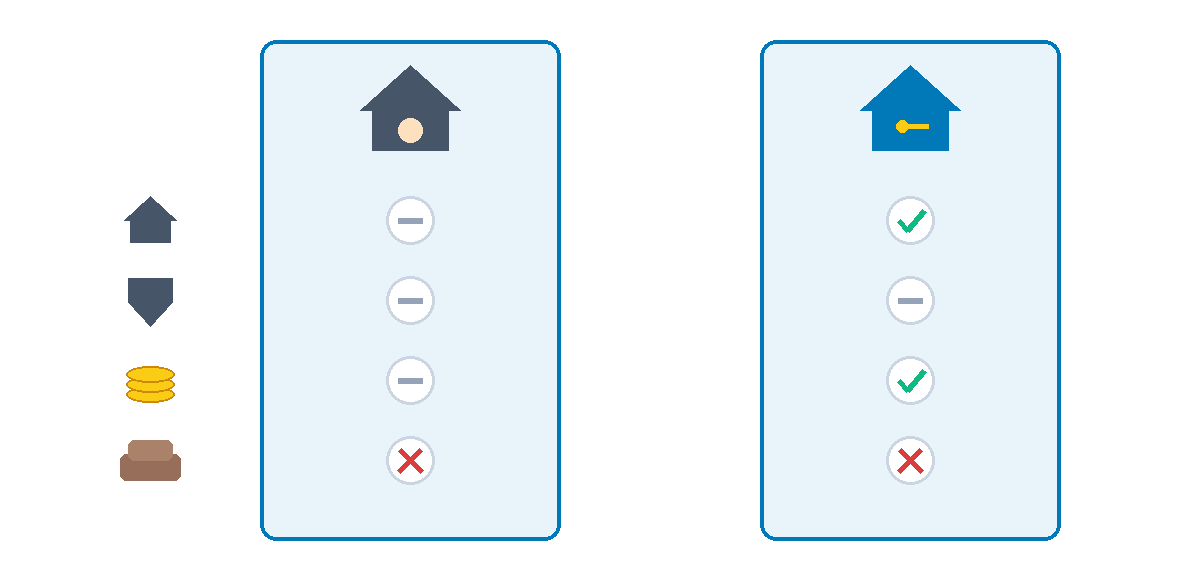
| Coverage | Homeowners policy (home you live in) | Landlord or dwelling policy (home you rent out) |
|---|---|---|
| Building while rented | May not cover losses while the home is rented out (Triple-I) | Covered for covered perils |
| Your property left on site | Check your policy | Items left for maintenance or tenant use (Triple-I) |
| Liability | Check your policy | Included in landlord policies per Triple-I; dwelling policies typically exclude it per NC DOI |
| Lost rent | Check your policy | Most landlord policies, for a specific period (Triple-I) |
| Tenant’s belongings | Not covered | Not covered; tenants need renters insurance |
| Regular short-term guests | No coverage for business activities (Triple-I) | Ask about a business, hotel or bed and breakfast policy |
What doesn’t landlord insurance cover?
Your tenant’s belongings are not covered, and most policies exclude wear and tear, neglect, and some kinds of water and earth damage.
Triple-I says: “As the landlord, your coverage is only on the structure itself and your financial interest in it. Your tenant’s personal possessions are not covered under your policy.” The NC Department of Insurance lists typical DP-3 exclusions, including “Neglect,” “Mold, rust, rot,” “Constant or repeated leakage or seepage of water or steam,” “Earth movement, such as earthquakes,” “Wear and tear; deterioration” and “Birds, rodents, insects or domestic animals.”
Ask your agent whether your policy covers flood or whether you need separate flood insurance. Ask about earthquake, vacancy rules and tenant-caused damage too, before you need them.
What is the difference between DP-1, DP-2 and DP-3 policies?
DP-1 covers a short list of named perils at actual cash value, DP-2 adds more named perils and usually pays replacement cost, and DP-3 covers the dwelling against all perils except listed exclusions.
| Form | Perils basis | How claims are typically settled |
|---|---|---|
| DP-1 (basic) | Named perils, typically fire, lightning and internal explosion | Actual cash value (replacement cost may be available for an added cost) |
| DP-2 (broad) | Named perils, adding items such as freezing, weight of ice and snow, and accidental discharge of water or steam | Typically replacement cost |
| DP-3 (special) | Open perils for the dwelling and other structures; named perils for personal property | Check your policy |
This table follows the North Carolina Department of Insurance’s explanation of dwelling policies. NC DOI notes that the DP-2 water coverage applies “as long as the building was not vacant for 60 days before a loss,” and that “Dwelling policies typically do not provide liability coverage, like some homeowners policy forms.” If your dwelling form leaves out liability, ask about a separate liability or umbrella policy.
How much does landlord insurance cost compared with homeowners insurance?
Expect it to cost more than a homeowners policy for the same home.
According to Triple-I, “Landlord policies generally cost about 25 percent more than a standard homeowners policy to pay for increased protections.” Your actual price depends on the home, location, coverage limits and insurer, so get quotes and ask your agent about:
- Rental type and lease length, and the number of units
- Expected vacancy periods
- Replacement cost vs actual cash value
- Loss-of-rent limits and how long they last
- Liability limits and whether you need an umbrella policy
Good upkeep also matters for safety and claims. See how to winterize a rental property, smoke detector requirements for landlords and our move-in inspection checklist.
Should you require tenants to carry renters insurance?
Many landlords do, because your policy does not cover the tenant’s belongings.
Triple-I notes that “many landlords require a tenant to buy renters insurance before signing a lease” to avoid disputes over damage to the renter’s belongings. Whether you can require it depends on your state and local rules; see can a landlord require renters insurance.
Is landlord insurance tax-deductible?
Generally, yes, as a rental expense.
IRS Publication 527 says “the expenses of renting your property, such as maintenance, insurance, taxes, and interest, can be deducted from your rental income,” and that if you pay a premium “for more than 1 year in advance,” you “can deduct only the part of the premium payment that applies to that year.” For more, see rental property tax deductions.
How does Apartment One help landlords lower day-to-day risk?
Apartment One helps on the leasing side: you can list for free and receive pre-screened applicants to review against your written criteria.
Apartment One is an online platform where renters complete a verified background and credit screening once, then get matched to rental properties they qualify for, while landlords list properties for free and receive pre-screened applicants.
Through the Property Partner program, renters screen once for credit (FICO 9 from Experian), eviction and criminal records, and you can message applicants in the app. Apartment One does not provide insurance.
The Tenant Fit Index (TFI) is Apartment One’s 0-100 score matching a renter to a property based on credit, income-to-rent ratio, eviction history, criminal history, and lifestyle preferences. The TFI is a tool used alongside written criteria, not a ranking or a decision-maker.
Apartment One is FCRA-compliant and follows GLBA and CCPA data handling. Data is encrypted, and payments are processed through Stripe.
Protect the property, then fill it with qualified renters.
Frequently asked questions
Is landlord insurance required by law?
Generally not by law, but your mortgage lender may require coverage. Check your loan documents and talk to your agent.
Does landlord insurance cover tenant damage?
It depends on the policy and the cause. Many policies exclude wear and tear and neglect, so ask your agent how tenant-caused damage is handled.
Does landlord insurance cover a short-term rental?
Not necessarily. Triple-I says regularly renting your primary residence to short-term guests is a business, which standard homeowners policies do not cover. Ask your agent which policy fits.
What is loss of rent coverage?
It replaces rental income you lose while a home is repaired after a covered loss. Triple-I says most landlord policies include it for a specific period.
Does landlord insurance cover my tenant’s belongings?
No. Triple-I says your tenant’s personal possessions are not covered under your policy, which is why many landlords require renters insurance.