

Check your lease to see which utilities are yours, find the providers for your address, then open each account about two weeks before move-in with your ID, lease and move-in date. Book internet early, set start dates on or before move-in day, and photograph meter readings when you arrive.
Picture it: keys in hand on a cold evening, boxes in the hall, and no power or Wi-Fi. A little planning in the two weeks before your move prevents that. Here is the step-by-step version.
How do you set up utilities in a new apartment?
Confirm which utilities you pay, contact each provider, and schedule service to start by move-in day.
- Read your lease. It should say which utilities you pay and which the landlord covers.
- Ask your landlord for the current providers for electric, gas, water, trash and internet at your address.
- Book internet first, since installation appointments can take time to get.
- Open or transfer each account about two weeks ahead, with a start date on or before move-in day.
- Change your address with USPS and with each sender separately.
- Test everything on move-in day and photograph the meters.
Which utilities do you need to set up as a renter?
It depends on your lease: some rentals include utilities in the rent, and others leave most of them to you.
The usual list is electricity, gas (if the unit has gas heat, hot water or a stove), water and sewer, trash and recycling, and internet. For example, a landlord might cover water and trash while you pay electric and internet, but every lease is different. To find the utilities section, see how to read a lease. If your building bills water or trash back to tenants as a monthly fee, see apartment junk fees for how those charges add to your monthly cost.
When should you set up utilities before moving?
About two weeks before move-in is a good target, and your USPS change of address should go in around the same time.
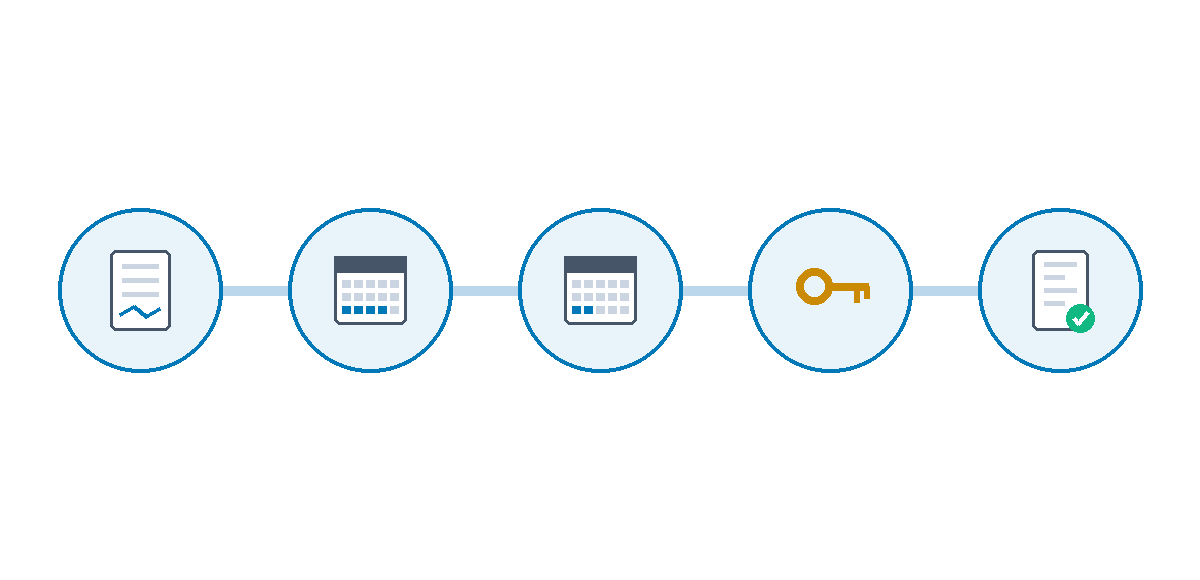
| When | What to do |
|---|---|
| When you sign | Confirm which utilities are yours; ask the landlord for current providers |
| About 2 weeks before | Open electric, gas and water accounts if they are yours; book internet installation; submit your USPS change of address |
| About 1 week before | Confirm start dates; learn trash and recycling rules; set your renters insurance start date |
| Move-in day | Test lights, outlets, heat, hot water and Wi-Fi; photograph meters; note problems on your move-in inspection |
| First month | Set up autopay; check the first bill against your move-in meter reading |
The timeline is a suggestion; providers differ. For the USPS step, the USPS change of address page says to “allow at least 7-10 business days for it to go into effect.” USPS also says: “If you’re moving, submit a permanent change of address request so your USPS mail is properly rerouted to your new address.”
USPS notes that “Standard mail forwarding lasts 12 months,” and the online request requires you to “Pay the $1.25 identity verification fee.”
The USPS page also warns: “Your change of address order only changes your mailing address with the Post Office.” It says senders like government agencies and financial institutions don’t allow forwarding of sensitive documents, including “Credit cards, bank statements, insurance info, and other financial or medical information,” so “Contact the sender directly to change your address with them.” Update each utility account too.
While you are planning the week before move-in, set your renters insurance to start the same day; see how much renters insurance costs.
What do utility companies ask for when you open an account?
Usually your ID, the service address and your start date, and sometimes more.
Have these ready, since a provider may ask for any of them:
- A government-issued photo ID
- The full service address, including the unit number
- Your move-in or start date
- Your lease, as proof you live there
- A payment method
- Your Social Security number or a deposit
Requirements differ by provider and state, so ask what they need when you call.
How can you avoid or lower a utility deposit?
Ask the provider how it decides on deposits and what you can show to avoid or reduce one.
- Ask for the provider’s deposit criteria in writing.
- Ask whether a letter showing on-time payments from your previous provider counts.
- Ask whether you can pay a required deposit in installments.
- Keep the receipt, and ask how and when the deposit is refunded.
If you are staying with the same provider, ask to transfer your service instead of opening a new account. Schedule your old service to end the day after you move out, so you are not paying for an empty unit or moving out in the dark.
How do you set up internet in a new apartment?
Find out which providers serve your building, then book installation as early as you can.
The FCC National Broadband Map has a “Search by Address” tool you can use to look up internet service at your new address. Also ask your landlord which providers already have lines in the building and whether there is a building-wide service you are expected to use. If you can, schedule installation for move-in day or the day after.
What should you do on move-in day?
Test every utility, photograph the meters, and write down any problems.
- Turn on lights and test outlets in every room.
- Run the heat and hot water.
- Check the stove and any gas appliances.
- Connect to Wi-Fi.
- Photograph each meter and note the date.
- Add problems to your move-in inspection and tell your landlord in writing.
In winter, if your heat runs on gas you pay for, schedule gas service early so you are not without heat. If your landlord provides heat and it is not working, see what to do when a landlord is not providing heat. If the previous tenant’s service is still on, call the provider to start service in your name as of move-in day.
Living with roommates? Decide whose name goes on each account and how you will split the bills, and write it down in a roommate agreement.
What if you can’t afford your utility bills?
Look into LIHEAP, a federally funded program that helps with energy bills.
The HHS Administration for Children and Families says “LIHEAP provides federally funded assistance to reduce the costs associated with home energy bills, energy crises, weatherization, and minor energy-related home repairs.” For help applying, it says you “may also contact the National Energy Assistance Referral (NEAR) number at 1-866-674-6327.”
The same page warns that LIHEAP “does not provide direct grants to individuals; LIHEAP does not charge a fee for receiving a benefit,” and that if you get a message offering a LIHEAP grant or asking for a fee, you should “contact the U.S. Department of Health and Human Services (HHS) Fraud Hotline at 1-800-447-8477.”
Be wary of anyone claiming to be your utility who demands payment by gift card or threatens an immediate shutoff. Pay only through your provider’s official website or the phone number on your bill.
How does Apartment One help you get to move-in day faster?
You screen once and share the same report with landlords, so you can apply quickly when you find the right place.
Apartment One is an online platform where renters complete a verified background and credit screening once, then get matched to rental properties they qualify for, while landlords list properties for free and receive pre-screened applicants.
Renters screen once for credit (FICO 9 from Experian), eviction and criminal records. Quick Screen is $35 one-time for a screening report only, and Tenant Plus is $60 one-time for screening plus access to matched property listings. Pricing can vary by state, so check Apartment One’s pricing page.
The Tenant Fit Index (TFI) is Apartment One’s 0-100 score matching a renter to a property based on credit, income-to-rent ratio, eviction history, criminal history, and lifestyle preferences. The TFI is a tool used alongside written criteria, not a ranking or a decision-maker.
Apartment One is FCRA-compliant and follows GLBA and CCPA data handling. Data is encrypted, and payments are processed through Stripe.
New to renting? Start with how to rent your first apartment.
Found the place? Have your screening ready so the move goes as smoothly as the utilities.
Frequently asked questions
How far in advance should I set up utilities?
About two weeks before move-in is a good target, with internet booked as early as you can.
Do I need my SSN to set up utilities?
Providers often ask for it. If you would rather not share it or do not have one, ask the provider what alternatives it accepts, such as a deposit.
Can I put utilities in my roommate’s name?
Yes, if your roommate agrees. Put whose name is on each account and how you split bills in a roommate agreement.
What happens if the previous tenant’s utilities are still on?
Call the provider and ask to start service in your name on your move-in day.
Do I need to change my address with USPS and the utility?
Yes, separately. USPS says a change of address only changes your mailing address with the Post Office.