

To show a rental property safely and efficiently, post written screening criteria in the listing, confirm each visitor’s name and phone before the visit, and offer set time blocks. Use the same safety steps for every visitor, give a current tenant proper notice, answer everyone the same way, and follow up in writing.
How do you show a rental property?
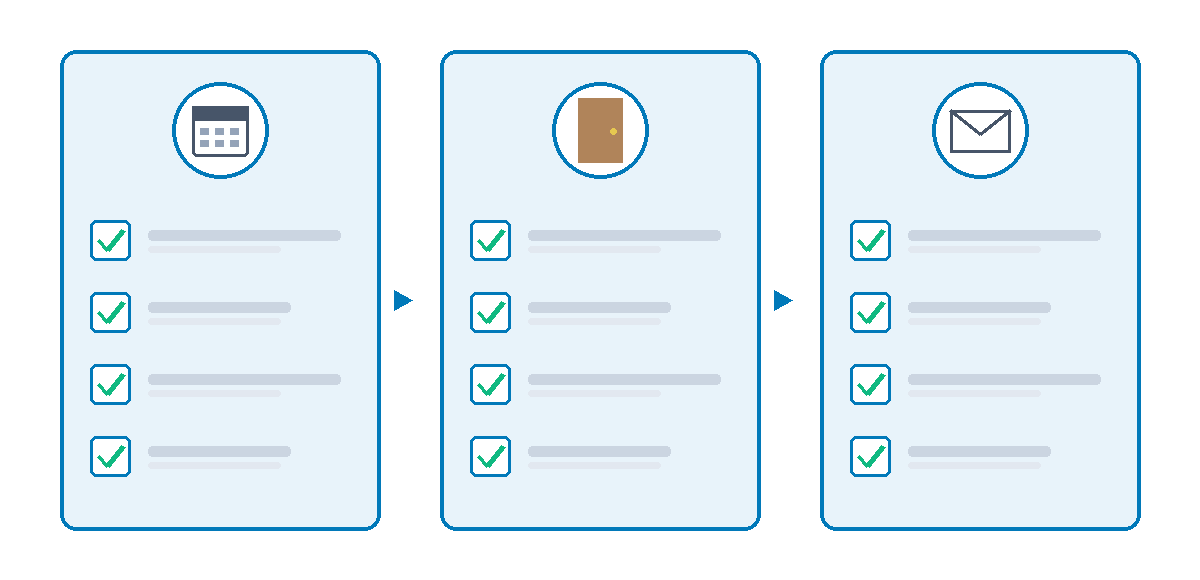
Follow five steps: set criteria, schedule and confirm, prepare the unit, run the tour the same way every time, and follow up in writing.
Showings matter more when units take longer to lease. The Apartment List National Rent Report (October 28, 2026) found that “Units are taking 36 days to get leased after being listed, a bit longer than is typical for this time of year,” and that 32% of multifamily properties offered concessions worth at least one month of free rent in October. Radix’s Rent and Operating Trends Report put national occupancy at 94.44% for the week ending November 15, 2026. A tight showing process helps you use that time well.
- Write your screening criteria and put them in the listing.
- Schedule visits in set blocks and confirm each visitor in writing.
- Prepare the unit and a one-page info sheet.
- Run each tour with the same steps and safety habits.
- Send the same follow-up and application link to everyone.
How do you schedule showings without wasting time?
Put your criteria up front, reply quickly, offer a few fixed time blocks, and confirm every visitor before you go.
- Criteria in the listing: income, screening and pet rules in writing, so renters can decide before they book. For listing wording, see how to write a rental listing.
- Same-day replies: fast answers keep interested renters from moving on. More vacancy tips are in how to reduce rental vacancy.
- Time blocks: offer two or three windows a week, with private tours back to back.
- Written confirmation: get each visitor’s full name and phone number, and send a reminder the day before.
- Info sheet: one page with rent, deposit, fees, utilities, pet policy and how to apply.
Should you do an open house, private showings, virtual or self-guided tours?
Private showings suit most landlords, with photos and a virtual tour to pre-qualify interest; open houses and self-guided tours trade convenience for less control.
Renters still want to see the unit in person. Zillow’s 2026 Consumer Housing Trends Report found that the typical recent renter took one in-person tour, that 85% of recent renters took at least one and 45% took at least two, and that 14% took none. In the same report, 57% of recent renters said taking a private tour was essential, compared with 26% for a 3D or virtual tour. Zillow also found that about half (51%) of renters considered seeing pictures essential.
| Format | Pros | Cons | Safety notes |
|---|---|---|---|
| Private showing | Personal, lets you answer questions | Takes more of your time | Confirm identity first; use the same steps for everyone |
| Open house | Many visitors in one window | Harder to track who comes and goes | Bring a second person; log every visitor |
| Virtual tour | Pre-qualifies interest from anywhere | Renters may still want to visit | No in-person risk; keep personal items out of frame |
| Self-guided tour | Flexible hours, no staff on site | Less control over the unit | Verify identity through the vendor; post a scam warning inside |
How do you stay safe when showing a rental?
Use the same safety checklist for every visitor: confirm identity, tell someone your schedule, keep your phone in hand, let visitors walk ahead, and stay near the exit.
Showings carry real risk for the people who run them. The National Association of REALTORS 2024 Member Safety Residential Report, which surveyed real estate agents rather than landlords, found that 22% of residential members experienced a situation that made them fear for their personal safety or the safety of their personal information in 2024. Those agents most often felt unsafe during an open house (34%), after a threatening or inappropriate message (31%), and during a showing (31%), and 17% felt unsafe while hosting an open house alone.
The National Apartment Association’s Leasing Safety best practices (March 5, 2020) advise asking for identification from everyone touring, including companions, because “any variation from this policy could lead to the appearance” of discrimination. NAA also advises keeping a charged phone in hand, letting prospects lead into the unit, never allowing them “to get between you and an exterior door,” and documenting everyone who visits.
- Schedule in daylight when you can, and share your schedule with someone you trust.
- Ask every visitor for ID, or ask no one.
- Keep your phone charged and in hand.
- Let visitors walk ahead, and stay between them and the exit.
- Do not follow a stranger into a basement, closet or small room.
- Remove valuables beforehand, then walk and lock the unit afterward.
How do you show a rental that is still occupied?
Give the notice your state law and lease require, agree on a time with the tenant, and protect the tenant’s privacy and belongings.
Entry notice rules vary by state, so check can a landlord enter without notice before you schedule. Ask the tenant to put away valuables and medications, never share the tenant’s name, contact details or schedule with visitors, and keep showings within the agreed window.
How do you keep showings fair-housing compliant?
Give every prospect the same information, the same answers, and the same follow-up, and never steer anyone toward or away from a unit.
The Fair Housing Act, 42 U.S.C. 3604(d) makes it unlawful “to represent to any person because of race, color, religion, sex, handicap, familial status, or national origin that any dwelling is not available for inspection, sale, or rental when such dwelling is in fact so available.” Keep a written script for common questions and apply your ID and scheduling rules to everyone. For what not to ask, see questions landlords can’t ask.
How do you protect your listing from rental scammers?
Watch for copies of your listing, especially with self-guided tours, and post a warning inside the unit that explains how to apply officially.
The FTC’s December 2025 Data Spotlight on rental scams reports that scammers copy “listings from landlords who use self-tour services,” then send renters a code to open a lockbox, and that “scam warnings sometimes posted inside these homes have helped tip some people off.” A sign saying you never ask for payment by text or wire, and naming your official application link, gives renters a clear check. For the renter side, see rental scams.
What should you do after a showing?
Send every visitor the same written follow-up with your application link, then log who came and when.
Use one template for everyone, so no one gets a different answer about availability or next steps. Walk the unit, lock up, and note anything that needs attention before the next tour.
How can pre-screened applicants cut down wasted showings?
When renters arrive already screened, you can spend showings on people who fit your written criteria, though you still review each report yourself.
Apartment One is an online platform where renters complete a verified background and credit screening once, then get matched to rental properties they qualify for, while landlords list properties for free and receive pre-screened applicants.
Through the Property Partner program, listing is free, applicants are pre-screened for credit (FICO 9 from Experian), eviction and criminal records, and you can message renters in the app. Learn more in pre-screened tenants.
The Tenant Fit Index (TFI) is Apartment One’s 0-100 score matching a renter to a property based on credit, income-to-rent ratio, eviction history, criminal history, and lifestyle preferences. The TFI is a tool used alongside written criteria, not a ranking or a decision-maker.
Apartment One is FCRA-compliant and follows GLBA and CCPA data handling. Data is encrypted, and payments are processed through Stripe.
Spend your showings on qualified renters.
Frequently asked questions
How long should a rental showing take?
Long enough for the renter to see each room and ask questions. Leave a short buffer between private tours so visitors do not overlap.
Should I ask for ID before a showing?
If you do, ask everyone. The National Apartment Association advises asking every visitor, including companions, because inconsistency can look discriminatory.
Are self-guided tours safe?
They can work with identity verification through the vendor and a scam warning inside the unit, but you have less control over who enters.
How much notice do I give a current tenant before a showing?
It depends on your state law and your lease. Check the entry notice rules for your state before you schedule.
Can I show a rental before the current tenant moves out?
Yes, if you give proper notice under your state law and the lease, and coordinate the time with the tenant.