

Pre-screened tenants are rental applicants whose credit, eviction and criminal history were checked by a screening service before they applied to your unit. Pre-screened does not mean pre-approved: you still review the report against your written criteria, verify income and identity, follow fair housing and FCRA rules, and make the decision yourself.
General information, not legal advice. Screening, fair housing and consumer report rules can vary by state and city, so check local law or talk to an attorney.
What does “pre-screened tenants” mean?
A pre-screened tenant is an applicant who completed a tenant screening before applying to your rental, so a report already exists when they reach you.
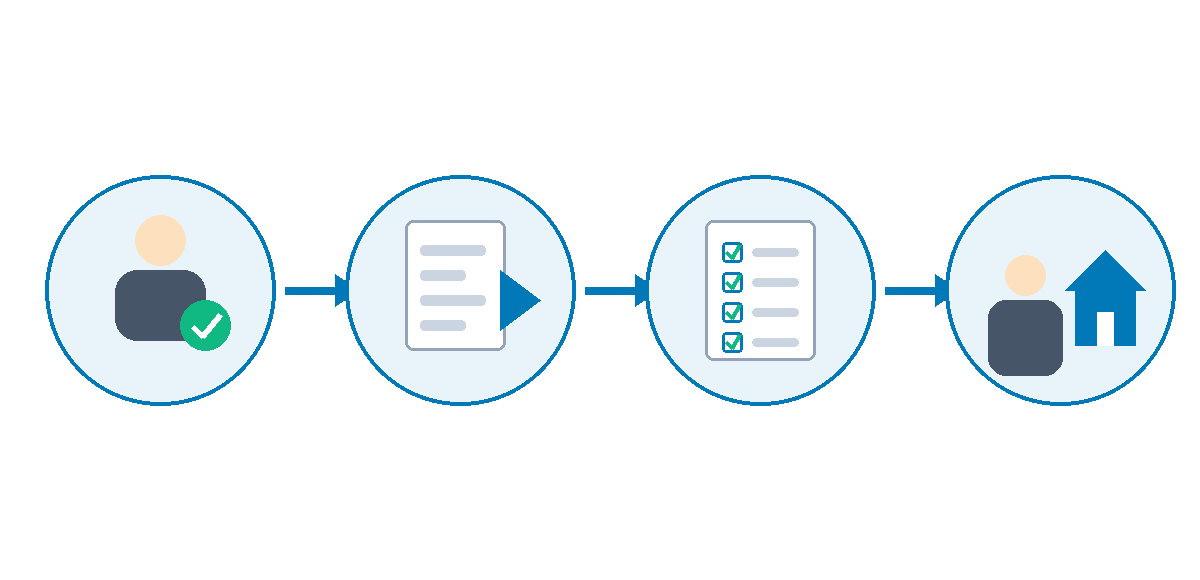
The renter starts the process instead of the landlord. They complete a screening once, then share the report with landlords whose listings fit them. You still read the report, compare it with your written criteria and decide.
Screening reports are a normal part of renting. The Consumer Financial Protection Bureau (CFPB) says most landlords and property managers use rental background checks, also called tenant screening reports, to decide whether to rent to someone. For how to run your own check from scratch, see tenant background checks for landlords.
How is a pre-screened tenant different from a pre-approved one?
A pre-screened applicant has a completed report; a pre-approved applicant would already have a yes. Pre-screening is information, not a decision.
Pre-screened does not mean an applicant will pay on time or is lower risk. It means the checks are done before the application. The leasing decision, and the legal duties that come with it, stay with you.
| Traditional screening | Pre-screened applicants | |
|---|---|---|
| Who starts the screening | Landlord orders a report after the application | Renter completes a screening before applying |
| When the report exists | After the applicant applies to your unit | Before the applicant contacts you |
| How you get it | From the screening company you use | Shared by the applicant |
| Who decides | Landlord, using written criteria | Landlord, using written criteria |
| FCRA and fair housing duties | Apply | Still apply |
What does a tenant pre-screening usually include?
Most pre-screenings cover credit, eviction history and criminal history, though the exact contents depend on the screening service.
The CFPB says most rental background checks include credit information from Equifax, Experian and TransUnion. It also says federal law generally bans negative information like evictions from being included on a report after seven years, and that sealed or expunged records should not be on a report.
The FTC guide for landlords says tenant background check reports are consumer reports, and that consumer reports can include credit reports, rental-history reports, criminal-history reports and a risk score or recommendation from a tenant screening company based on criteria you selected. On Apartment One, a renter’s screening covers credit (FICO 9 from Experian), eviction and criminal records. For the renter’s view of what is in a report, see what a tenant screening report shows.
Why are landlords looking at pre-screened applicants now?
More vacant units and many applicants with thin or low credit make it more important to find qualified renters quickly and look at the whole picture.
Realtor.com reported that the national rental vacancy rate reached 7.6% in the third quarter of 2026, the highest level since early 2014, citing the Census Bureau’s Housing Vacancy Survey. The same Realtor.com report said the October median asking rent rose $1 year over year to $1,692, the first year-over-year increase since June 2023.
TransUnion says that in an analysis of its rental screening data from January 2025 through June 2026, one in five applicants were declined, with roughly two-thirds of those declines driven by credit score, and another 11% were referred for further review because they had little or no credit history. TransUnion also says about 44% of renters nationally have credit scores below 660.
A credit score is not the whole story. A Nova Credit report, as described by TransUnion, found that 26% to 37% of declined and conditionally approved applicants have the cash flow of a qualified renter. That is one reason to accept other evidence, such as bank funds, within your written criteria.
What should landlords still verify themselves?
Confirm the report belongs to the applicant, verify income, and apply the same written criteria to everyone.
- Identity: Make sure the name and details on the report match the applicant’s ID.
- Income: Check pay stubs, offer letters or bank statements. See how to verify tenant income.
- Written criteria: Use the same standards for every applicant. See how to write tenant screening criteria.
- References and rental history: Call prior landlords where your criteria include it.
- Report date: Note when the report was run, and decide in your criteria how recent it must be.
For ways to attract strong applicants in the first place, see how to find good tenants.
What rules still apply when you use pre-screened tenants?
The FCRA and fair housing rules still apply, whoever started the screening.
The FTC says that when you use consumer reports to make tenant decisions, you must comply with the Fair Credit Reporting Act (FCRA), which the FTC enforces. The FTC says you can only get a consumer report if you have a permissible purpose, that landlords may get consumer reports on applicants and tenants who apply to rent or renew a lease, and that written permission from applicants can show a permissible purpose.
The FTC defines adverse action as any action by a landlord that is unfavorable to the interests of a rental applicant or tenant, such as denying the application, requiring a co-signer, requiring a deposit not required of another applicant, requiring a larger deposit, or charging higher rent than for another applicant. According to the FTC, the adverse action notice must include the name, address and phone number of the company that supplied the report, a statement that the company did not make the decision and cannot give specific reasons, and notice of the right to dispute the report and to get a free copy if requested within 60 days. The FTC adds that even if the report played only a small part in the decision, you must notify the applicant, and that you must securely dispose of the report and information gathered from it. See our adverse action notice guide.
Fair housing applies too. The FTC warns that a blanket policy of refusing to rent to anyone with a criminal record may violate the Fair Housing Act. Applicants can also dispute errors: the CFPB says renters can dispute with the background check company and with the source of the information, in writing with supporting documents.
How do you get pre-screened tenants for your rental?
List your rental where renters screen before they apply. On Apartment One, landlords list for free and receive pre-screened applicants.
Apartment One is an online platform where renters complete a verified background and credit screening once, then get matched to rental properties they qualify for, while landlords list properties for free and receive pre-screened applicants.
Through the Property Partner program, listing is free. Renters screen once for credit (FICO 9 from Experian), eviction and criminal records, and can share their report with you. You can talk with applicants through in-app messaging, and Apartment One supports standard, short-term, senior living, VASH and Section 8 rentals. Renters with low credit can add Financial Stability Documents to qualify based on bank funds, which you review against your own criteria. To learn how screening works on the renter side, see Apartment One tenant screening.
The Tenant Fit Index (TFI) is Apartment One’s 0-100 score matching a renter to a property based on credit, income-to-rent ratio, eviction history, criminal history, and lifestyle preferences. The TFI is a tool used alongside written criteria, not a ranking or a decision-maker.
Apartment One is FCRA-compliant and follows GLBA and CCPA data handling. Data is encrypted, and payments are processed through Stripe.
List your rental for free and receive pre-screened applicants.
Frequently asked questions
Is it legal to accept a screening report the renter already has?
The FTC says landlords may get consumer reports on applicants who apply to rent, and that landlords who use consumer reports to make tenant decisions must comply with the FCRA. Apply the same written criteria to every applicant and check state or local rules.
Does pre-screened mean the tenant is guaranteed to pay?
No. Pre-screened means a screening was completed before the applicant applied. It is not a guarantee of payment or a pre-approval, and you still decide using your written criteria.
Do landlords pay for pre-screened applicants on Apartment One?
No. Landlords list properties for free through the Property Partner program and receive pre-screened applicants.
Can I still run my own check?
Yes, if you have a permissible purpose. The FTC says landlords may get consumer reports on applicants who apply to rent, and written permission from the applicant can show a permissible purpose.
What if an applicant has low credit but strong savings?
On Apartment One, renters with low credit can add Financial Stability Documents to qualify based on bank funds. Review them against your written criteria like any other information.