

Yes, in most cases you can move your Section 8 Housing Choice Voucher to another city or state through portability. You tell your current housing authority where you want to live, it coordinates with the housing authority there, and you then follow the new agency’s procedures. Some families must wait 12 months, and agency rules vary.
General information, not legal advice. Your housing authority’s procedures control; ask your PHA before you give notice or move.
What is Section 8 portability?
Section 8 portability is moving with your voucher to a home outside the area your current public housing agency (PHA) serves.
Federal rules at 24 CFR 982.4 define portability as renting a dwelling unit with Section 8 tenant-based assistance outside the jurisdiction of the initial PHA, and define a jurisdiction as the area in which the PHA has authority under state and local law to administer the program.
Can you move your Section 8 voucher to another state?
Generally yes. Federal rules give voucher holders and participants a right to use their voucher anywhere in the United States where a PHA runs a tenant-based voucher program, with some limits.
Under 24 CFR 982.353(b), a voucher-holder or participant family has the right to receive tenant-based voucher assistance to lease a unit outside the initial PHA jurisdiction, anywhere in the United States, in the jurisdiction of a PHA with a tenant-based program. That right is subject to the nonresident rule in paragraph (c) and to the program’s grounds for denying or ending assistance.
Portability does not mean every landlord in the new area will rent to you. For the landlord side, see how to become a Section 8 landlord.
Who is eligible to port a voucher?
Most current voucher families can port, but new families who did not live in the PHA’s area when they applied, and families who broke their lease, face limits.
The 12-month nonresident rule. Under 24 CFR 982.353(c), if neither the head of household nor spouse had a domicile (legal residence) in the initial PHA’s jurisdiction when the family first applied, then for the 12 months after the family is admitted to the program, the family may lease anywhere in that PHA’s jurisdiction but does not have any right to portability. The same rule says the initial PHA may choose to allow portability during this period.
Lease violations. According to 24 CFR 982.353(b), the initial PHA must not provide portable assistance for a participant if the family moved out of the assisted unit in violation of the lease, with an exception for families who move to protect someone who is or has been a victim of domestic violence, dating violence, sexual assault or stalking, as described in the rule.
Safety moves. 24 CFR 982.353(c)(4) says the 12-month nonresident rule does not apply when a family member is or has been a victim of domestic violence, dating violence, sexual assault or stalking and the move is needed to protect the health or safety of the family or family member.
PHA move policies. Under 24 CFR 982.354(c), a PHA may set policies that prohibit any move during the initial lease term and more than one move in any one-year period, with the same safety exception. Ask your PHA which of these policies it uses.
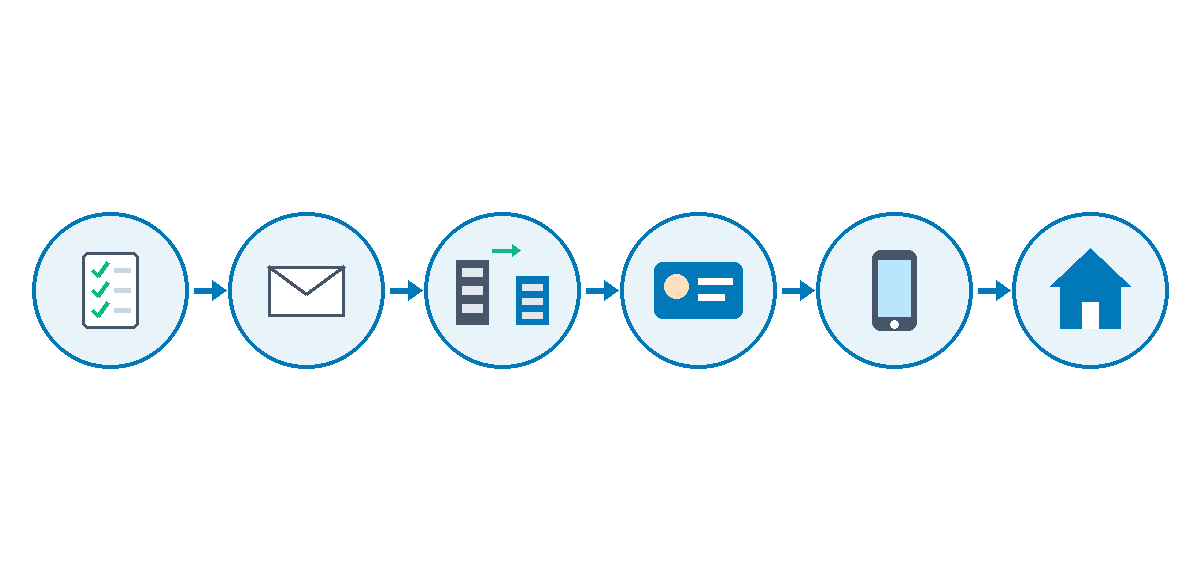
How do you transfer a Section 8 voucher, step by step?
You start with your current PHA, which coordinates with the PHA in the new area before you get a voucher to move.
- Check that you can move. Review your lease status and whether the 12-month nonresident rule applies to you.
- Notify your current PHA and your landlord. 24 CFR 982.354(d) says a family must notify the PHA and the owner before moving out of the old unit, and that notice to the initial PHA must specify the area where the family wants to move.
- Let the PHAs coordinate. Under 24 CFR 982.355(c), the initial PHA determines whether you are eligible to move and contacts the receiving PHA before approving the move to find out whether the voucher will be absorbed or billed.
- Get your voucher and contact details. The same rule says the initial PHA must issue the family a voucher to move, if it has not already done so, and advise the family how to contact and request assistance from the receiving PHA.
- Contact the receiving PHA promptly. 24 CFR 982.355(c)(8) says the family must promptly contact the receiving PHA to learn its procedures for incoming portable families and comply with them, and that failure to comply may result in denial or termination of the receiving PHA’s voucher.
- Find a unit and submit your request for tenancy approval. Under 24 CFR 982.355(c)(15), the family must submit a request for tenancy approval to the receiving PHA during the term of the receiving PHA’s voucher.
What’s the difference between the initial PHA and the receiving PHA?
The initial PHA is the agency you are moving away from, and the receiving PHA is the agency in the area you are moving to.
Under 24 CFR 982.4, the initial PHA is the PHA that originally selected a family that later decides to move out of its jurisdiction, or a PHA that absorbed a family that later decides to move out. Under the same definitions section, a receiving PHA is a PHA that receives a family selected for participation in another PHA’s voucher program, and it issues a voucher and provides program assistance to the family.
24 CFR 982.355(b) says a receiving PHA cannot refuse to assist incoming portable families or direct them to another neighboring PHA, and that if more than one PHA serves the area, the initial PHA gives the family contact information and the family selects the receiving PHA. The same rule says HUD may excuse a PHA from accepting incoming families in some cases, such as a declared disaster area, but only with written HUD approval.
The receiving PHA either absorbs your voucher or bills the initial PHA. Under 24 CFR 982.355(d) and (e), a receiving PHA may absorb the family into its own program if funding is available, and otherwise it may bill the initial PHA for housing assistance payments and administrative fees.
What can delay or block a portability move?
Eligibility limits, funding, missed steps with the receiving PHA, and an expiring voucher are the main causes of trouble.
- The 12-month nonresident rule under 24 CFR 982.353(c), unless your initial PHA chooses to allow the move.
- Lease violations or other grounds for denial. 24 CFR 982.354(e)(2) says a PHA may deny permission to move at any time on the program’s grounds for denial or termination, and 982.355(c)(17) says either PHA may deny or terminate assistance on those grounds.
- Funding. 24 CFR 982.355(c)(5) says that if the receiving PHA will bill the initial PHA and the cost of assistance will increase because of the move, the initial PHA may deny the move if it does not have sufficient funding for continued assistance.
- Voucher term. 24 CFR 982.303 says the initial term of a voucher must be at least 60 calendar days and that extensions are at the PHA’s discretion. Under 24 CFR 982.355(c)(13), the receiving PHA’s voucher may not expire before 30 calendar days from the expiration date of the initial PHA’s voucher, and after it is issued, the receiving PHA’s extension policies apply.
- Different local rules. 24 CFR 982.355(c)(10) and (12) says the voucher is administered under the receiving PHA’s policies and that it sets your family unit size using its own subsidy standards, so your unit size and assistance may differ in the new area.
How do you find a place that accepts your voucher in the new city?
Start your search early, ask the receiving PHA about its process, and focus on rentals that accept vouchers.
For search tips, see apartments that accept Section 8 and Apartment One’s Section 8 housing page. Apartment One supports standard, short-term, senior living, VASH and Section 8 rentals, and you can see apartments you qualify for after you screen.
Apartment One is an online platform where renters complete a verified background and credit screening once, then get matched to rental properties they qualify for, while landlords list properties for free and receive pre-screened applicants.
Screening covers credit (FICO 9 from Experian), eviction and criminal records, and you can share your report with landlords. Quick Screen is $35 one-time for a screening report only, and Tenant Plus is $60 one-time for screening plus access to matched property listings. Pricing can vary by state, so check Apartment One’s pricing page.
The Tenant Fit Index (TFI) is Apartment One’s 0-100 score matching a renter to a property based on credit, income-to-rent ratio, eviction history, criminal history, and lifestyle preferences. The TFI is a tool used alongside written criteria, not a ranking or a decision-maker.
Apartment One is FCRA-compliant and follows GLBA and CCPA data handling. Data is encrypted, and payments are processed through Stripe.
Moving with a voucher? Screen once and see rentals you qualify for in your new city.
Frequently asked questions
Can a receiving housing authority refuse my voucher?
Generally no. Under 24 CFR 982.355(b), a receiving PHA cannot refuse incoming portable families or send them to a neighboring PHA unless HUD approves in writing, for example in a declared disaster area.
Do I have to requalify on income when I port?
Not if you are already a participant. 24 CFR 982.353(d) says income eligibility is not redetermined when a participant family moves under portability. New families must be income eligible where they first lease.
Can I port in my first year?
It depends. If neither the head of household nor spouse lived in the initial PHA’s area when you applied, you have no right to port for 12 months after admission, though the PHA may allow it. Safety moves for survivors are an exception.
Does portability apply to HUD-VASH?
Ask your PHA or VA case manager. 24 CFR 982.355(g) says special purpose vouchers such as HUD-VASH follow HUD-established policy where HUD has set alternative requirements.
Is this legal advice?
No. Your housing authority’s procedures control; ask your PHA before you give notice or move.